
History
Mansions like this one, in Corfu, are a product of the Venetian era, remnant of a medieval feudal system that had its origins with the Angevin lords, who ruled the island in the 13th century. So families came from many locations, and those with wealth and initiative became the nobles of Corfu. Of the great clans, 'the Marmoras, Theotokis and Prosalendis were of Byzantine extraction, the Capodistrias and Giallinas from Dalmatia, the Voulgaris from Epirus, the Sordinas from the Veneto, while the Pieri were French... the Kourkoumelis and the Flamburiaris (moved) from Cephalonia to Corfu.' (Britain's Greek Empire - Michael Pratt).
It is this period which saw the construction of the great country houses, 'residences intended originally and principally as a base from which to oversee the gathering of agricultural produce and to supervise the labourers which toiled in the service of the great landowners. These buildings, manor houses in essence, were used as temporary residences at harvest time and are characterized by their extensive storage capacity and generous provision of various outhouses.' (Noble houses of Corfu - Despina Paisidou)
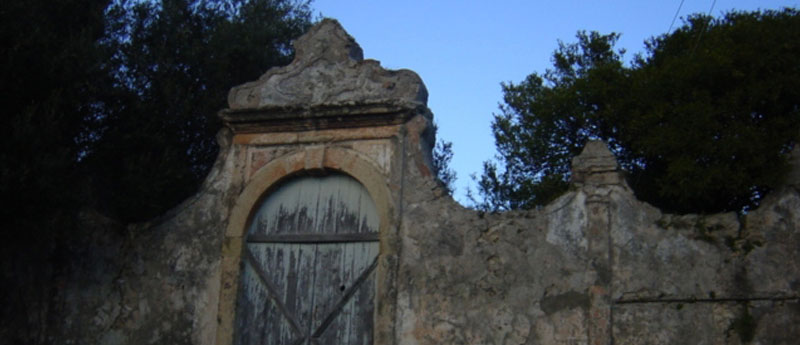
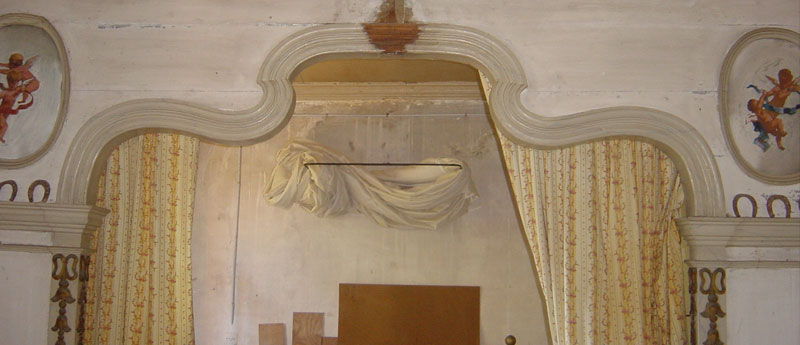
"The Artist of Corfu" as he is known, Angelos Giallinas (1857-1939) is the most celebrated painter of Corfu’s countryside, a painter whose work captured the soft light of the island. Much imitated (many present-day artists follow the style of the so-called ‘Giallinas School’) and very productive, his paintings hang in public and private collections all over the world, bringing the gentle warmth of the Corfu sun to other climes. A canny businessman, Giallinas bought the Kavalouri mansion when it had to be put up for sale by its original owner,the Chalikiopoulos family. The gateway bears their coat of arms, but the house bears evidence of the artist’s presence.